
Refrigerated Containers
20ft and 40ft high cube reefer containers with Thermo King units and CSC plates, inspected before dispatch and delivered across the lower 48.
Showing all 5 results
-
 Refrigerated Containers
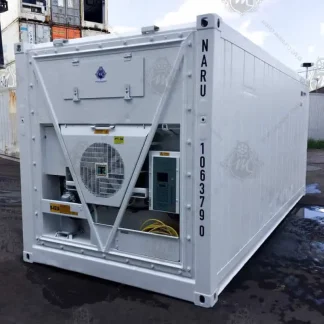
20ft Refrigerated Container (Unit A)
$4,365.00 Add to cart -
 Refrigerated Containers
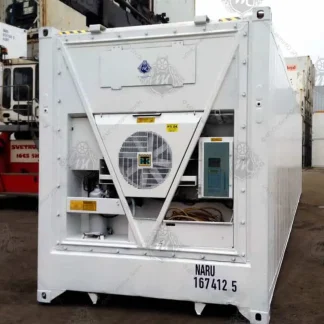
20ft Refrigerated Container (Unit B)
$4,320.00 Add to cart -
 Refrigerated Containers
40ft High Cube Refrigerated Container (Unit A)
$7,190.87 Add to cart -
 Refrigerated Containers
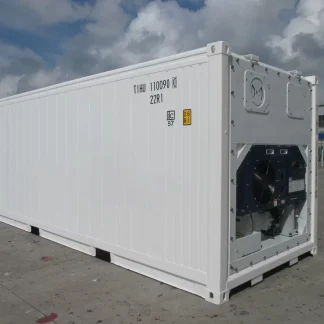
40ft High Cube Refrigerated Container (Unit B)
$8,505.00 Add to cart -
 Refrigerated Containers
Refrigerated Containers for Sale
Price range: $1,395.00 through $2,385.00 Select options This product has multiple variants. The options may be chosen on the product page
Showing all 5 results
Refrigerated Containers and Reefer Units for Cold Storage
A refrigerated container is a steel shipping container with an insulated shell and an integrated refrigeration machine built into one end. Growers, butchers, breweries, florists, restaurants, caterers, labs and distribution yards use them as standing cold rooms, as overflow capacity through a busy season, or as freezer space that can be moved to another site later.
Atlas carries reefers in 20ft and 40ft high cube formats. Typical stock is fitted with Thermo King refrigeration, holds a set point across a broad range of roughly -40°C to +30°C, and carries a valid CSC plate. Some units come with NARU serial numbers. Insulated panels, a T-bar floor for airflow under the load, and heavy gasketed doors are standard to the type. Individual specifications vary by unit, so read the listing for the one you want.
Choosing between 20ft and 40ft
- 20ft reefer. Easier to place on a tight site, cheaper to power, and usually enough for a single kitchen, taproom or small harvest operation.
- 40ft high cube reefer. Extra length plus the added interior height of a high cube, which matters when you are stacking pallets rather than loose product.
- Chiller or freezer duty. Both formats hold freezer temperatures, but pulling deep-freeze set points in hot weather works the machine harder and costs more to run.
Power, Servicing and Siting Requirements
This is where a refrigerated container differs sharply from a dry box, and it is worth settling before you order. Atlas sells reefers as supplied and inspected. We do not perform electrical work, connections or on-site commissioning.
Power supply. Most reefer units run on three-phase power. That is not something you can improvise from a standard outlet. Have a licensed electrician confirm your available service, voltage and amperage against the data plate on the specific unit before purchase, and have them make the connection. Where three-phase is unavailable, buyers often use a suitably rated generator, which again is a conversation for your electrician. Factor in that a reefer draws power continuously, not just at start-up.
Servicing. The refrigeration machine is a piece of mechanical equipment and needs periodic servicing by a refrigeration technician. Line up a local service contact before you rely on the unit for stock you cannot afford to lose. Check condenser coils stay clean and clear of debris, and keep door gaskets in good order.
Siting. Set the container level on firm ground so the doors seal and condensate drains properly. Leave clear air space around the machinery end. Shade helps in an Arkansas summer. Permanent installations may need a permit depending on your jurisdiction.
Delivery and Ordering
Refrigerated containers ship to the lower 48 states on specialized tilt-bed trailers, at one flat shipping rate per order shown at checkout. Delivery needs a firm, reasonably level approach, overhead clearance and space for the trailer to tilt the container off. Order handling runs one to three business days and transit typically three to seven. Every unit is inspected before dispatch. Checkout payment is by direct bank transfer, and a 30-day return policy applies, with return freight and a restocking fee possible.
Compare interior heights on the high cube containers page if you are weighing a reefer against insulated dry storage, or see storage containers for unpowered options. The buyers guide covers condition and access planning, and the contact page is the place to send your site and power details before ordering a refrigerated container.